
- VisitExploreLearn
Happy Hollow Blog
Meet Sonries – Chapter 4: Jaguar 101
November 6, 2026
By Zoo Educator Casey B.
Getting to Know Jaguars
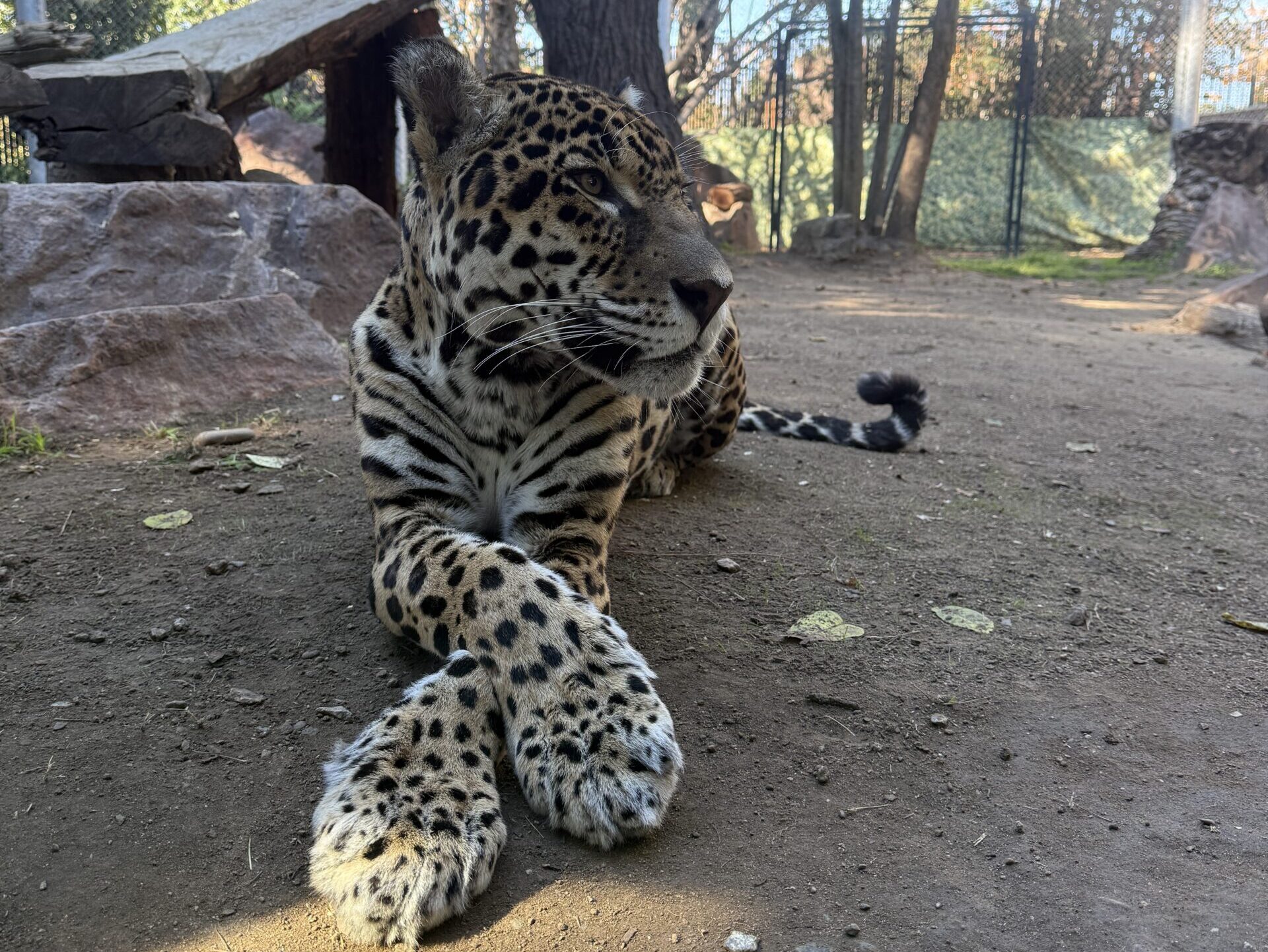
Sonries is a member of a truly remarkable species. One of the most powerful predators in the Americas, jaguars are strong swimmers, skilled climbers and possess the strongest bite of any big cat. Jaguars belong to the genus Panthera, a group that also includes tigers, lions, leopards and snow leopards. Typically weighing anywhere between 100-250 pounds, the jaguar is the largest big cat in the Americas and the third largest on the planet, behind only their tiger and lion cousins. Currently found throughout Central and South America, their range used to be much larger, reaching as far north as the most southern portion of California. They are typically either nocturnal or crepuscular (active at both dawn and dusk) and are most commonly found in rainforest habitats.
Built for the Hunt
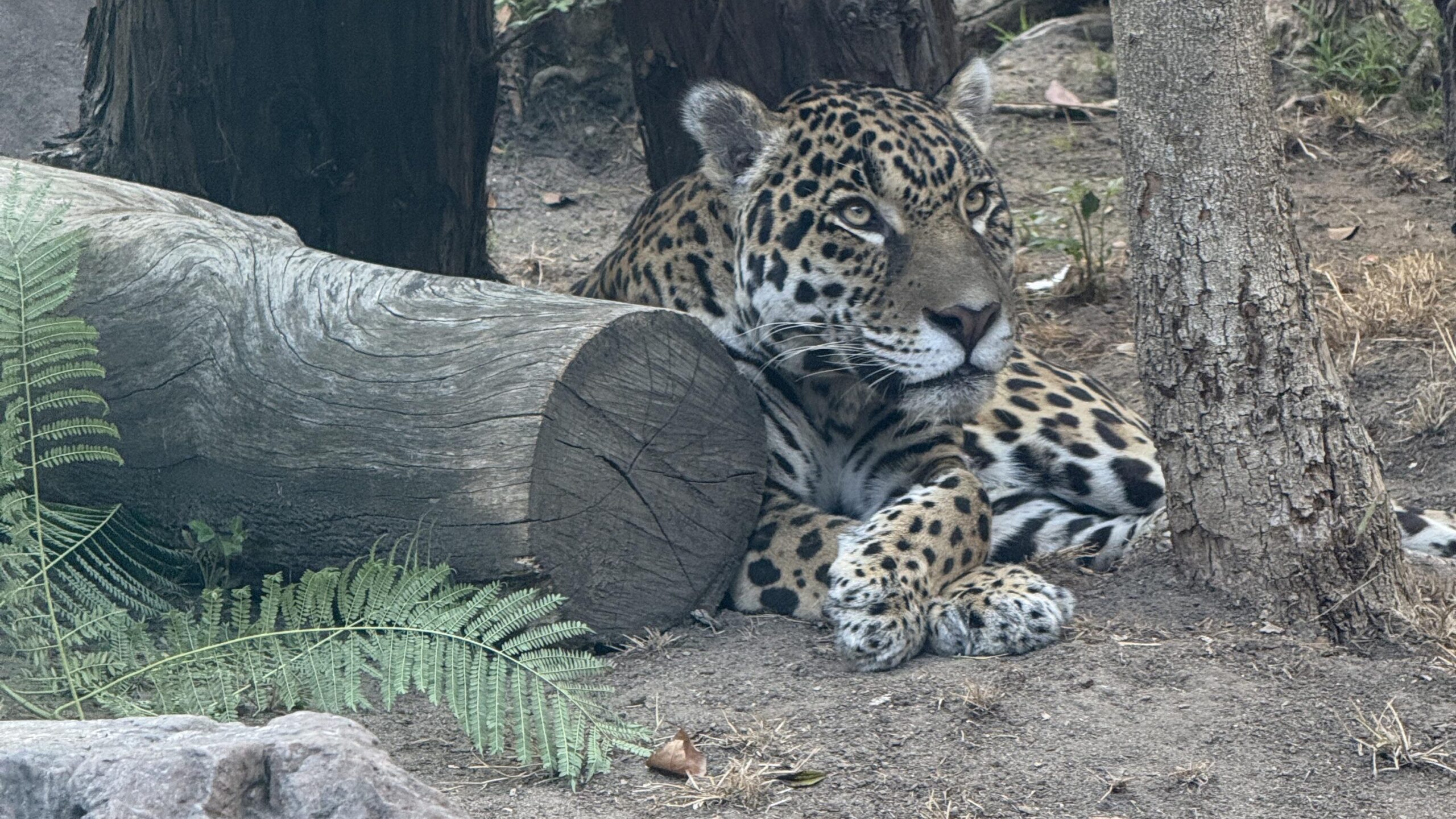
Jaguars are carnivores, meaning their diet consists entirely of meat. And they are highly skilled hunters. Unlike some animals who try to chase down their prey, jaguars are ambush predators. They often remain perfectly still, hidden among vegetation, waiting for prey to wander within striking distance. Once they are close enough, the jaguar will lunge forward with one quick burst of speed, using their powerful jaws to deliver a killing blow. Despite their smaller size, the jaguar has the strongest bite of any of the big cats, measuring in around 1,500 psi. Unlike most other cat species, which typically target the neck of their prey, the jaguar has commonly been seen targeting the head, their jaws strong enough to bite through the incredibly tough bones in the skull. Jaguars are also amazing climbers, able to leap 10 feet straight up into the air, often with a mouth filled with their most recent prey item. That is why Sonries loves to spend time up high. The best places to spot him are often on the branch in the center of his habitat or atop the highest rocky area on the right side of the enclosure.
A Pattern All Their Own
On the topic of “spots”, one of the most striking features of jaguars is their distinctive fur pattern. Consisting of a mixture of dots and rosettes, these spots are key for telling jaguars apart from other spotted cats. Jaguars, leopards and cheetahs are all known for their spotted coats so it can be easy to mix them up with one another if you don’t know what to look for. The key is in the details. Cheetah spots are simply black spots in a polka-dot pattern, while leopards have larger rings of spots called rosettes. Jaguars have both. Their coat patterns feature small black spots inside rosettes. And these spots are not only for show. They act as excellent camouflage, allowing jaguars to blend into the dappled light and shadows of the rainforest floor. Just like a fingerprint, no two jaguars have exactly the same rosette pattern. In Sonries’s case, a group of spots on his forehead resembles a smiley face, inspiring his name (the word “sonreir” is Spanish for “to smile”).
Making a Splash
As natural rainforest inhabitants, jaguars are surprisingly comfortable in the water. They are excellent swimmers, with their large paws and muscular legs allowing them to easily cross rivers in order to find food. Some jaguars have even been observed enjoying an occasional dip in the water seemingly for fun. However, every animal is an individual, and Sonries is no exception. While the majority of his species might enjoy the occasional swim, he doesn’t quite seem to have the same enthusiasm for water, being initially very apprehensive of the pool and waterfall in his habitat.
Alone, but Not Lonely
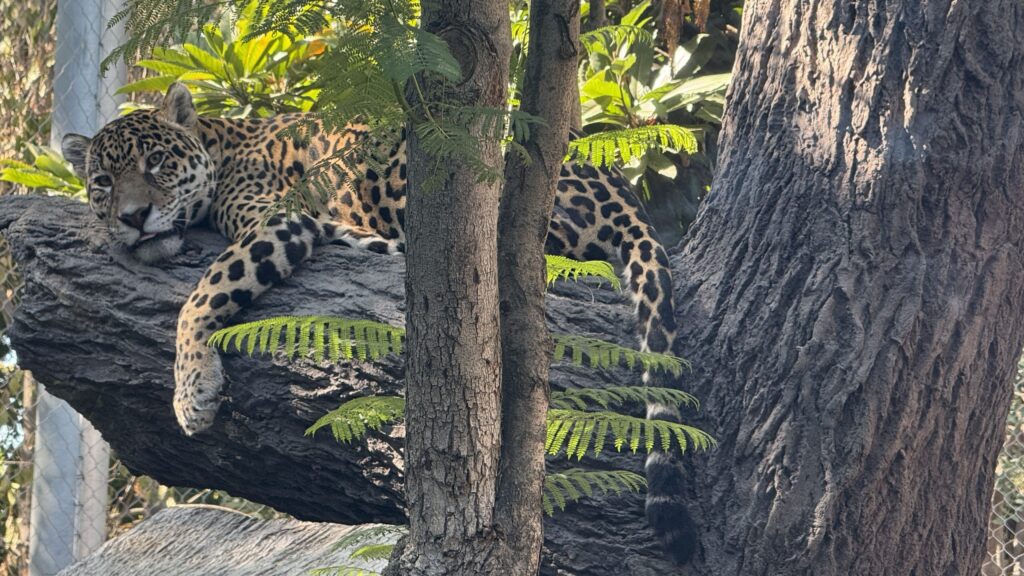
One thing that Sonries does enjoy is his alone time. Solitary by nature, jaguars generally prefer to live alone. Males and females typically interact only long enough for mating before going their separate ways. This can happen year-round and is not restricted to a set mating season. Jaguar cubs will stay with their mother for up to two years, after which time they will adopt the solitary lifestyle of the species and establish their own territory. Jaguars will often walk the perimeter of their territory, scent marking the boundaries to signal to other jaguars that the area is claimed. It’s an unspoken warning that says, “This is my territory, so stay out!”
What Sonries Can Teach Us
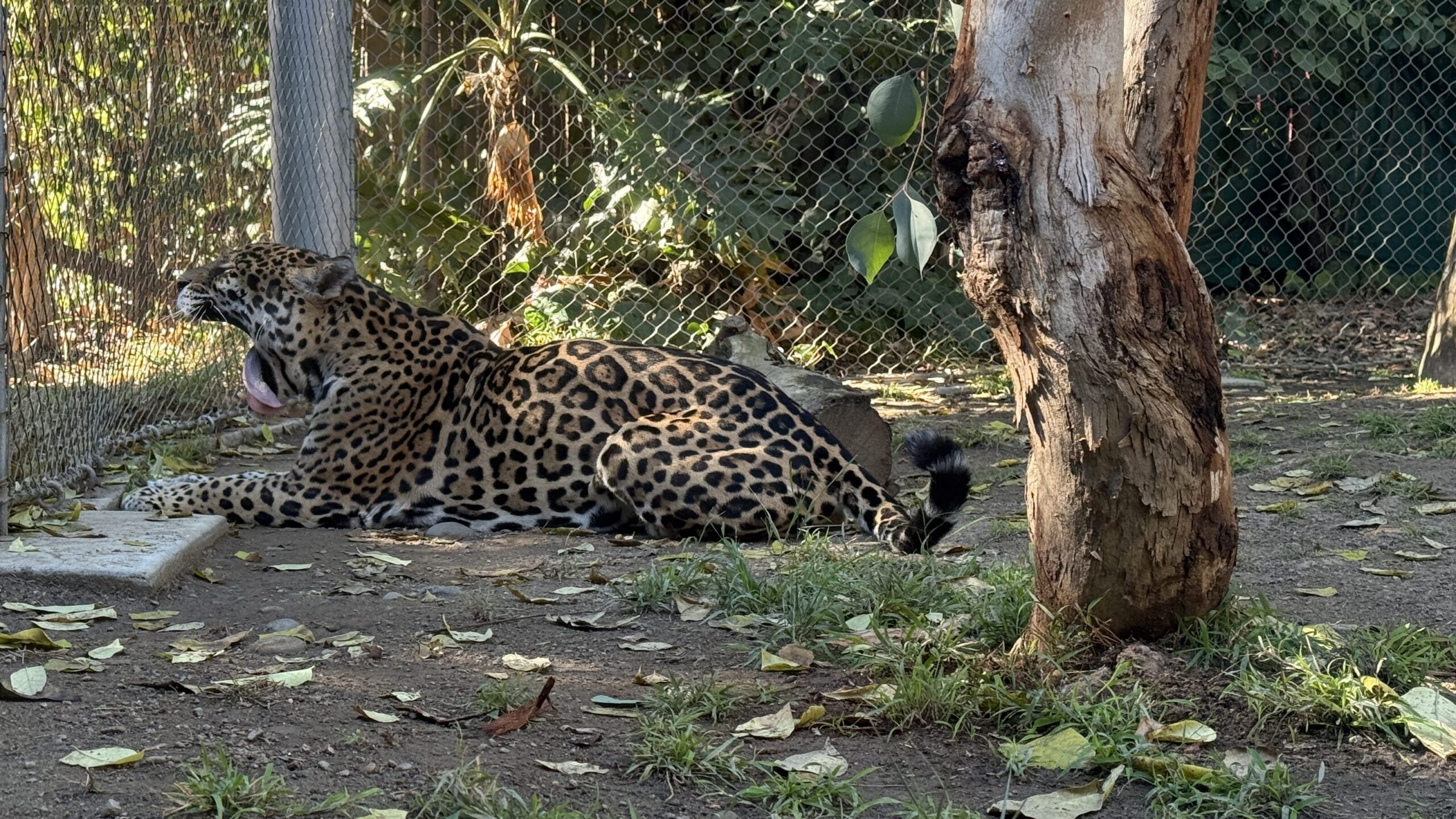
Jaguars truly are remarkable animals, and there is so much we can learn by observing them. From their powerful hunting adaptations to the unique ways they use their habitat, jaguars offer valuable insights into both their own lives and the rainforest ecosystems they call home. The next time you visit Sonries in the jaguar habitat at Zoo in the Hollow, take a few moments to watch him closely and see if you can spot some of the behaviors described here. Is Sonries resting high above the ground, scent marking his habitat, or showing off his impressive climbing skills? What behaviors do you notice, and what might they reveal about this fascinating species?
Follow Along
This is Chapter 4 of the Meet Sonries series.
Learn more by reading Chapter 1, Chapter 2, and Chapter 3
Meet Sonries: Chapter 5 coming soon