
- VisitExploreLearnEducation Ambassadors
Lesser Madagascar Hedgehog Tenrec
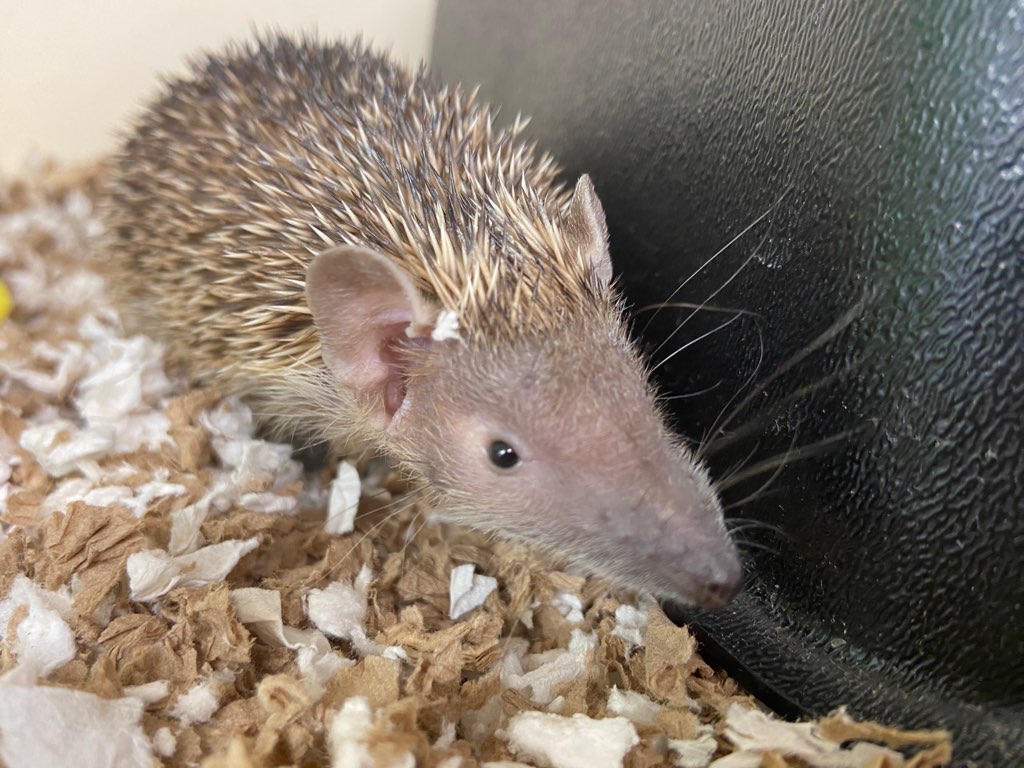
Scientific name: Echinops telfairi
Family: Tenrecidae
Order: Afrosoricida
Class: Mammalia
Range: Southern and southwestern Madagascar
Habitat: Savannah plains,
marshes, thorn forests
Lifespan: 8–10 years in the wild, 13 years in captivityWhat do they look like?
Native to the southern and southwestern parts of the island of Madagascar, the lesser Madagascar hedgehog tenrec will usually weigh between 4 to 7 ounces and be 5.5 to 7 inches long. They have soft fur on their stomachs and face while their backs are covered with pointed spines that are meant to discourage potential predators. Their colors can range anywhere from white to black to brown.
How do they behave?
When threatened by a predator, these animals will roll up in a ball, only exposing their spikes to deter them. If this does not work, the tenrec will then charge with bared teeth attempting to bite with its powerful jaws.
What’s on the menu?
Primarily insectivores, these animals will mostly feed on insects and spiders in the wild, though they will occasionally also eat fruits, vegetables, eggs, and baby mice. At the zoo they are fed insectivore pellets, fruits, veggies, lettuce, and mealworms.
How are they born?
Lesser Madagascar Hedgehog Tenrecs will often go through torpor for 3 to 5 months during the cold season and will begin to mate after they come out of it, usually around October. Gestation can last anywhere from 61 to 68 days. The female Lesser Madagascar Hedgehog Tenrec will then give birth through a cloaca, a body part that is very unusual for a mammal. Females can give birth to anywhere from one to ten young, with five to seven being the most common. Tenrecs grow quickly and are independent within 30 to 31 days.
Tenrec vs Hedgehog
Though they do look very similar (with some species of tenrec even being named after the hedgehog), they are not closely related. In addition to their difference in habitat (with the African hedgehog living on the continent of Africa and tenrecs residing on the island of Madagascar), there are also key physical differences that can be used to tell the two apart. Tenrecs have a longer snout and look more rodent–like in appearance (though they are not members of the rodent family) as well as longer toes that are used for occasional climbing. Tenrecs are also slightly smaller and have a longer lifespan.
Conservation Connection
Though they are listed as being of Least Concern, logging and habitat loss have led to a decrease in the overall population of lesser Madagascar tenrecs in some areas. Some things we can do to help are reducing the amount of single use plastics we use and practicing ecotourism whenever traveling to other parts of the world.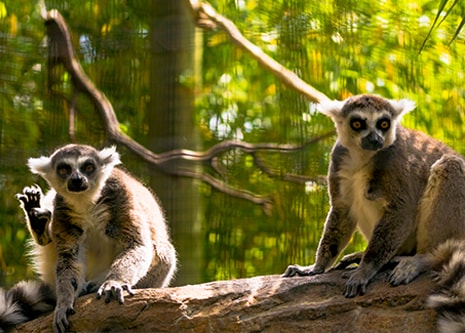
Zoo on the Hill
Located across from the Keep-Around Carousel is the Zoo on the Hill. Learn about wildlife up close during daily meet-and-greets, leap like a lemur on the playground, brush and feed the goats,, or take a peek inside Doc’s Critter Care building and the Ranch House. Double-H Ranch features a combination of animal exhibits, including giant anteaters and red ruffed lemurs, as well chickens and domesticated animals that are docile enough to touch.
See Animals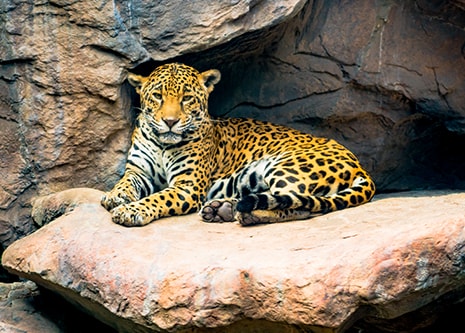
Zoo in the Hollow
Follow the crooked bamboo pathway down into the hollow and visit with some of the most amazing animals in the world. Where else in San José can you get up close to a stunning jaguar, lemur, meerkat or American alligator? Happy Hollow is dedicated to helping save species and preserve wildlife for future generations by participating in Species Survival Plan programs through the Association of Zoos and Aquariums.
See AnimalsVisit Us Today
Plan an unforgettable experience at San Jose’s family-friendly park and zoo.
more info