- VisitExploreLearnZoo in the Hollow
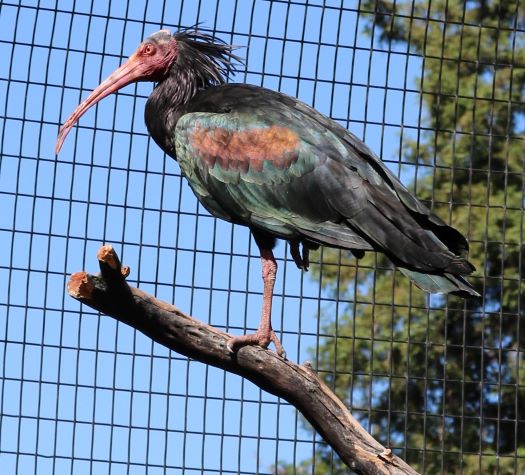
Waldrapp Ibis
Scientific name: Geronticus eremita
Family: Threskiornithidae
Order: Pelecaniformes
Class: Aves
Range: Small areas of Morocco
Habitat: Shrubland, Grassland,
Wetlands, Coastlines
Lifespan: 10–15 years in the wild;
20–25 years in captivityWhat do they look like?
Also known as the Northern Bald Ibis, the Waldrapp Ibis is a bird with a glossy black feathered body and a bald, dull red face and throat. Because their bald head is easily noticeable by predators, Waldrapp Ibises also have a clump of feathers around the neck known as a “wispy ruff” that they will use to hide their heads while sleeping. Both males and females are roughly the same size, averaging 2.5 feet tall and 2.5 pounds, with males often being slightly larger.How do they behave?
Incredibly social birds, the Waldrapp Ibis are often found in flocks, with numbers ranging from only a few individuals to as many as 100 individuals, though most flocks average about 40 individuals. They also communicate by making a sound known as a “croop”, which scientists have described as sounding like a rough cough in the throat.What do they eat?
An omnivorous bird, Waldrapp Ibises commonly feed on berries, fruits, seeds, and aquatic plants as well as small reptiles, amphibians, mammals, fish, and insects. They will often use their long, curved beak to peck the ground and probe cracks and fissures for food. At the zoo, they are fed mealworms, crickets, pork, fruit, vegetables, and pellet diet.How are they born?
Waldrapp Ibises breed between the months of February and May with pairs mating for life. Both the males and females assist with building nests, using sticks lined with grass and often building them along rocky areas such as cliffs. When the nest is finished, females will lay a clutch of approximately 2–4 eggs that will hatch after about 25 days. Baby waldrapp ibises will stay in the nest for approximately 2 to 4 months and will not reach sexual maturity until they are around 3 to 5 years old.Conservation
The Waldrapp Ibis is listed as endangered by the International Union for Conservation of Nature (IUCN). Once able to be found in Central Europe, Northern Africa, and the Middle East, they are now restricted to small areas in Morocco, with estimates ranging from 200 to only 500 individuals left in the wild. There are multiple different factors that contributed to their dwindling numbers, including habitat loss as a result of the draining of wetlands, the use of pesticides, and climate change. The loss of eggs and chicks to predators such as ravens and vultures have also contributed to their smaller population size. However, the populations currently living in Morocco are considered stable and an international species action plan for the Waldrapp Ibis was published in 2006, with multiple zoos participating in captive breeding programs and 1,100 currently in captivity. If you would like to help the Waldrapp Ibis, consider supporting AZA–accredited zoos and aquariums that are involved with their breeding program as well as Birdlife International, an organization devoted to the conservation of birds of all kinds, including the Waldrapp Ibis.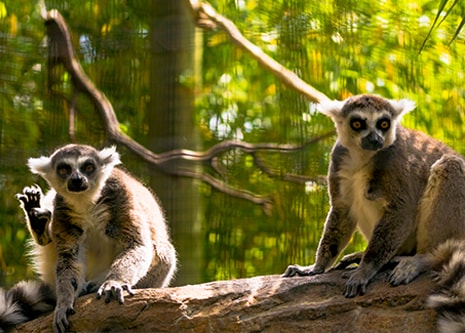
Zoo on the Hill
Located across from the Keep-Around Carousel is the Zoo on the Hill. Learn about wildlife up close during daily meet-and-greets, leap like a lemur on the playground, brush and feed the goats,, or take a peek inside Doc’s Critter Care building and the Ranch House. Double-H Ranch features a combination of animal exhibits, including giant anteaters and red ruffed lemurs, as well chickens and domesticated animals that are docile enough to touch.
See Animals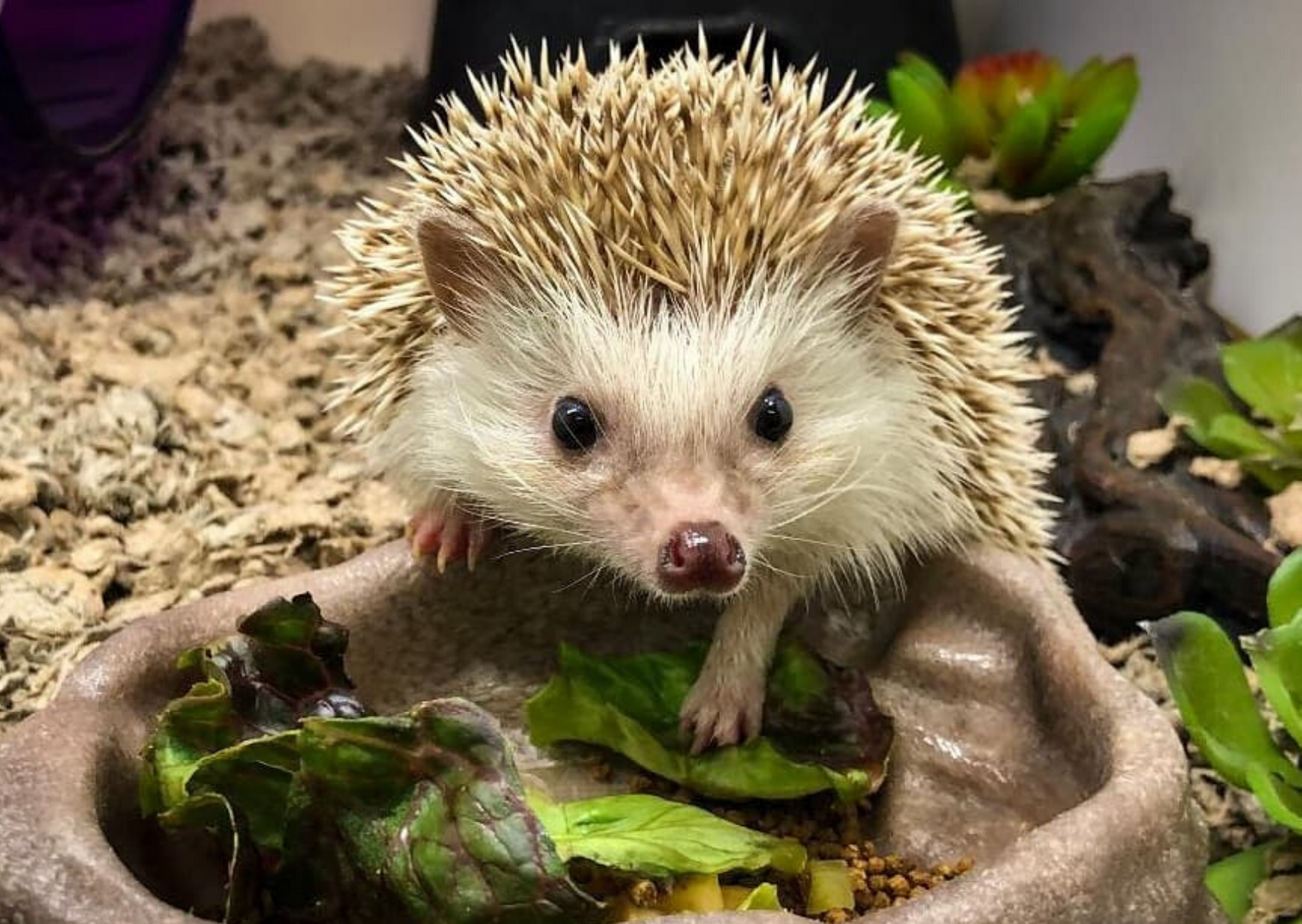
Education Ambassadors
From camps and classes to scout badges and sleepovers, Happy Hollow education programs have something for everyone! The zoo education program offers a broad range of hands-on, engaging programs and public presentations featuring education ambassador animals. These encounters are designed to connect you to wildlife and the conservation of their habitats around the world.
See AnimalsVisit Us Today
Plan an unforgettable experience at San Jose’s family-friendly park and zoo.
Learn More